Reputation is operational
A review is not just marketing content. It is evidence from a real location, connected to a real experience and often a real operational issue.
Why Breeze exists
Breeze is being built for the people responsible for many locations but forced to manage reviews, profile issues, customer feedback, and follow-up across disconnected tools.
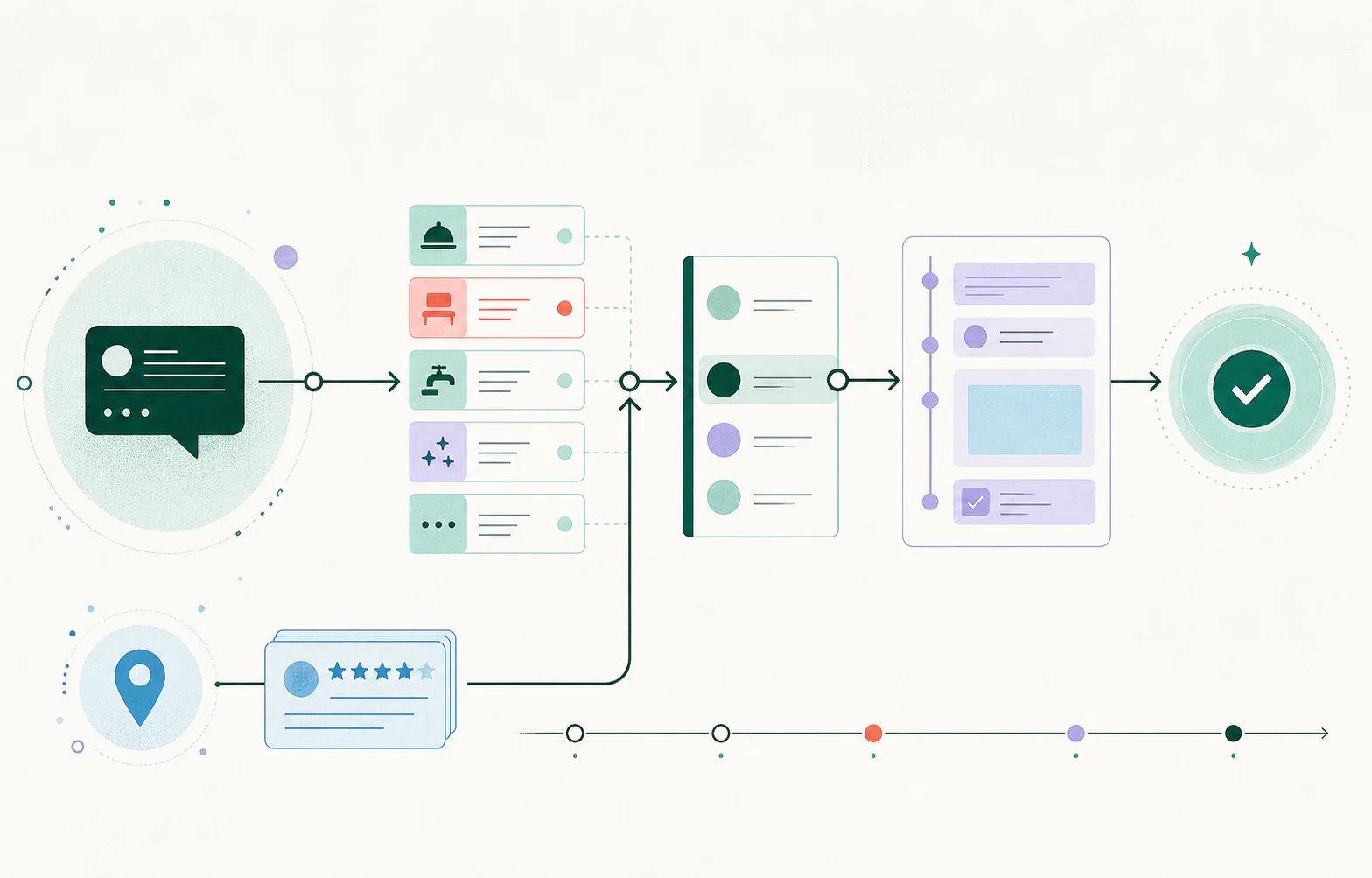
A customer experience happened first. Someone at a location owns what happened next. The public response matters, but so do the operational pattern, the profile information that shaped the visit, and whether the same issue keeps returning.
Breeze connects those pieces without pretending it controls the customer, the platform, or the outcome. The product is designed to help a team see the work, respond thoughtfully, and improve with evidence.
Product principles
These principles are more useful than a long feature promise. They decide how Breeze behaves when automation and honesty pull in different directions.
A review is not just marketing content. It is evidence from a real location, connected to a real experience and often a real operational issue.
Another notification does not solve anything. Important feedback should have a named owner, a deadline, and a visible next step.
Summaries must decompose into sources, locations, coverage, and examples. Breeze should never ask a team to trust a mysterious number.
AI can classify, summarize, and draft. People remain responsible for customer-facing replies, profile changes, and the claims their business makes.
Restaurant groups are the first proof. Review volume is high, location performance varies, operating themes recur, and delayed follow-up becomes public quickly.
The shared product model remains organization, brand, location, source, review, case, owner, and verified public fact. Other industries enter when they need that same workflow without custom product forks.
Color with a job
Forest stays the anchor. Supporting colors explain the state of the work rather than decorate the page.
Approval, ownership, progress, and control.
Location comparison, information, and context.
Profile integrity and later visibility layers.
Risk, exceptions, urgency, and unresolved work.
Founder-direct
Write directly. Early customer conversations shape both the product and its limits.
Talk to Arun